
You load the dishwasher, press start, and walk away. An hour later, you come back to a scene you never planned for: water creeping across your kitchen floor, soaking into cabinets, and, if you’re unlucky, dripping through the ceiling into the room below.
What looks like “just a bit of water” from a leaky dishwasher can quietly ruin flooring, blow kitchen units, encourage hidden mould and leave you staring at a repair bill running into the thousands. And that’s before you start the battle with your home insurer over what they will, and won’t, pay for.
This guide shows you exactly what to do the moment you spot a leak: how to find the cause, how to limit the damage, and, crucially, how to handle the insurance side so a dishwasher leak doesn’t turn into a long, expensive fight over your claim.
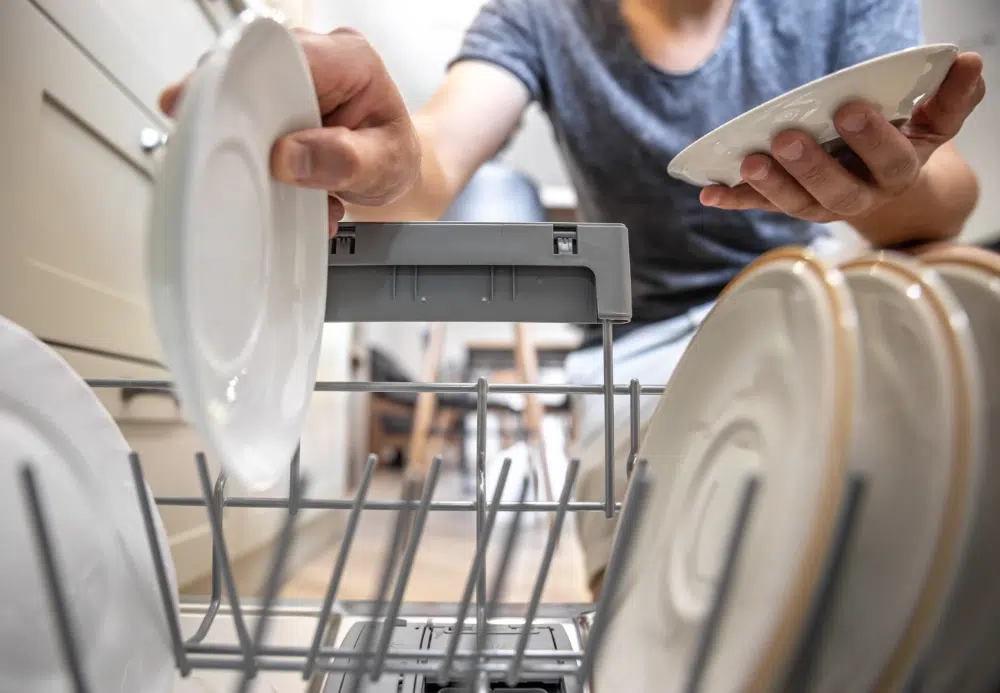
Common Causes of a Dishwasher Leaking from the Bottom
Understanding why your dishwasher is leaking from underneath is essential to fixing the problem effectively. Here are the most frequent causes:
1. Faulty or Worn Door Seal
The rubber gasket around your dishwasher door creates a watertight seal during cycles. Over time, this seal can become brittle, cracked, or covered in food debris and detergent buildup. When the seal fails or isn’t sealing properly, water escapes during the wash cycle and runs down the front of the dishwasher, pooling underneath. This is one of the most common causes of bottom leaks and often goes unnoticed until significant damage occurs.
2. Damaged or Loose Drain Hose
The drain hose carries wastewater from your dishwasher to your home’s drainage system. If this hose becomes loose at the connection points, develops cracks, or gets punctured, water will leak out and collect beneath the appliance. Check where the hose connects to both the dishwasher and the sink or garbage disposal; these connection points are particularly vulnerable.
3. Leaking Water Inlet Valve
The water inlet valve controls the flow of water into your dishwasher, and any issue here can create a water supply line leak. If the valve fails, becomes loose, or the supply hose deteriorates, water may escape before it even reaches the dishwasher tub. This type of leak often occurs at the bottom front or back of the appliance and can happen even when the dishwasher isn’t running.
4. Cracked or Damaged Spray Arm
The spray arms rotate during the wash cycle to distribute water throughout the dishwasher. If the lower spray arm cracks or if its mounting point becomes damaged, water can spray outside the tub area, eventually finding its way to the bottom of the machine. This is particularly common if you’ve accidentally loaded large items that restricted the spray arm’s movement.
5. Faulty Pump or Pump Seal
Your dishwasher’s pump circulates water during washing and drains it afterwards. If the pump itself fails or if the pump seal degrades, water will leak directly from the base of the appliance. Pump issues are more common in older dishwashers or those that have worked hard over many years.
6. Damaged Door Latch or Hinges
If your dishwasher door doesn’t close properly due to faulty hinges or a broken latch, the appliance door seal won’t make proper contact with the tub. This allows water to escape during cycles, running down the front and pooling underneath. Sometimes the door appears closed but isn’t sealed correctly.
7. Cracked Dishwasher Tub
While less common, the dishwasher tub itself can develop cracks, particularly in older models or plastic tubs that have been subjected to high heat over many years. A cracked tub means your dishwasher will need replacing rather than repairing, as this isn’t an economical fix.
8. Blocked or Damaged Float Switch
The float switch prevents your dishwasher from overfilling. If this mechanism becomes stuck or damaged, the dishwasher may overfill with water, which then overflows and leaks from the bottom. You’ll often notice this happening in the early stages of a cycle.
9. Using the Wrong Detergent
Using regular washing-up liquid instead of dishwasher-specific detergent creates excessive suds that overflow from the tub. Similarly, using too much dishwasher detergent can cause the same problem. The resulting foam finds its way out of the appliance and appears as a leak from underneath.
What to Do Immediately When Your Dishwasher Leaks
Time is critical when dealing with a dishwasher leaking from the bottom. Here’s what you need to do right away:
- Stop the Dishwasher and Cut the Power – Cancel the current cycle and turn off the dishwasher. For safety, switch off the power at the fuse box or unplug the appliance if accessible. Never investigate an electrical appliance while it’s still connected to power and standing in water.
- Turn Off the Water Supply – Locate the shut-off valve under your sink or wherever your dishwasher connects to the water supply, and turn it off to prevent further flooding.
- Remove Standing Water Immediately – Use towels, a mop, or a wet vacuum to clear away pooled water as quickly as possible. Water sitting on kitchen floors, especially laminate, hardwood, or under cabinets, causes rapid and extensive damage.
- Open Cabinets and Check for Spread – Water travels quickly through kitchen cabinetry, along walls, and through flooring. Open all nearby cabinets to check for water damage and allow air circulation. Look underneath sinks and inside base units.
- Document Everything Thoroughly – Take comprehensive photos and videos showing the leak, where water has pooled, any visible damage to floors and cabinets, and the dishwasher itself. This documentation is essential if you need to make an insurance claim for water damage.
- Pull Out the Dishwasher (If Safe to Do So) – If you can safely disconnect and pull out the dishwasher, you’ll be able to inspect the source of the leak more easily and dry the area underneath properly. However, only do this if you’re comfortable working with appliances and plumbing connections.
- Set Up Fans and Dehumidifiers – Getting air circulating in the affected area helps prevent mould growth, which can begin within 24-48 hours of water exposure.
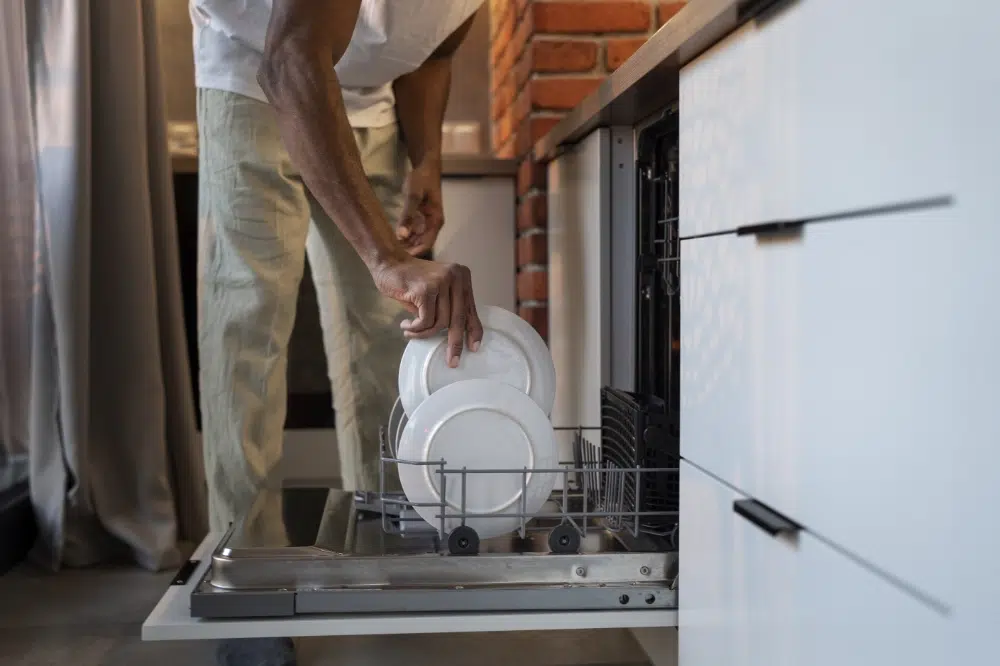
Diagnosing Your Dishwasher Leak: A Step-by-Step Approach
If you’re comfortable doing some basic troubleshooting, here’s how to identify the source:
Visual Inspection While Dry
With the dishwasher empty and powered off, examine:
- The door seal all the way around for tears, gaps, brittleness, or food debris
- All visible hose connections at the back and underneath for looseness or damage, and note if the drain line appears misaligned, kinked, or obstructed.
- The area around the door hinges and latch should be for proper alignment
- Inside the tub for cracks or damage
- The base filter for blockages, as a clogged filter can lead to leaks.
The Paper Test for Door Seals
Close an empty dishwasher door on a piece of paper, then try to pull it out. If the paper slides out easily, your door seal isn’t creating proper contact and may be the source of your leak.
Run a Test Cycle and Observe
If you can safely catch and contain water, run a short cycle while watching carefully to see when and where water appears:
- Leaking immediately when water enters: Likely an inlet valve or supply hose issue
- Leaking during the wash cycle: Probably a door seal, spray arm, or overfilling problem
- Leaking during draining: Most likely a drain hose, pump, or pump seal issue
Check the Drain Line Connection
The dishwasher drain line must be securely connected and form a proper high loop or air gap to prevent backflow. A loose or low hose can cause drainage problems that lead to leaks.
When Professional Help Is Essential
While some dishwasher leaks are straightforward fixes, others require professional appliance repair:
- You can’t identify the leak source after basic troubleshooting
- The leak appears to be from the pump or internal components
- Your dishwasher is still under warranty (DIY repairs may void this)
- You’ve found a cracked tub or a major component failure
- The leak has caused significant water damage, requiring a specialist assessment
The Real Problem: Water Damage to Your Kitchen and Beyond
A dishwasher leaking from the bottom can do far more than damage the appliance. Even a single cycle can release enough water to cause:
- Warped or buckled flooring: Laminate, hardwood, and vinyl are particularly vulnerable to water damage and can be ruined within hours
- Damaged kitchen cabinets: Water causes MDF and chipboard cabinets to swell, warp, and deteriorate
- Mould growth: Hidden moisture behind cabinets, under flooring, or in walls creates perfect conditions for mould, which poses health risks
- Ceiling damage in rooms below: If your kitchen is above another room, water often seeps through to the ceiling below, causing staining, sagging, or collapse
- Damage to electrical fittings: Water near plug sockets, under-cabinet lighting, or other electrical fixtures creates safety hazards
- Ruined skirting boards and wall plaster: Water wicks up walls, damaging plaster and causing paint to bubble and peel
The insidious nature of water damage is that much of it happens out of sight. By the time you notice mould, a musty smell, or visible structural damage, the problem has often been developing for weeks.
Will Your Home Insurance Cover Dishwasher Leak Damage?
This is where many homeowners run into difficulties. Most home insurance policies include coverage for “escape of water,” which can cover damage from appliance leaks. However, making a successful claim isn’t straightforward.
Insurance companies frequently dispute water damage claims by arguing:
- Lack of maintenance: They may claim the leak resulted from poor appliance maintenance or wear and tear that should have been addressed
- Gradual damage: If they can argue the leak was slow and ongoing rather than sudden, they might deny coverage
- Failure to mitigate: If you didn’t act quickly enough to stop the water and prevent further damage, you could reduce or deny your claim
- Pre-existing damage: Insurers often try to attribute some damage to pre-existing conditions rather than the current leak
The truth is that water leak insurance claims are among the most commonly disputed claims in the UK. When you contact your insurer, they’ll appoint a loss adjuster, but this person works for the insurance company, not for you. Their job is to minimise what the insurer pays out.

Don’t Navigate the Claims Process Alone
If your dishwasher leak has caused significant damage to your property, you shouldn’t have to face your insurance company without expert support on your side.
Property Claim Assist specialises in helping homeowners like you through the complex insurance claims process. As independent loss assessors, we work exclusively for you, not the insurance company. We assess the true extent of your damage, gather the comprehensive documentation insurers require, and negotiate firmly to secure the maximum settlement you’re entitled to.
We’ve supported countless homeowners who initially accepted inadequate offers that didn’t cover even half their actual repair costs. We’ve also helped clients whose valid claims were being denied because they didn’t know how to properly evidence the damage or respond to insurer tactics.
Our service includes:
- Thorough professional assessment of all visible and hidden damage
- Coordination with specialist surveyors and contractors
- Complete management of all insurer communication and paperwork
- Expert negotiation to maximise your settlement
- Ensuring no element of your damage is overlooked or undervalued
The sooner you get professionals involved who understand exactly what insurers look for and how to counter their arguments, the stronger your claim becomes. Don’t risk accepting less than you need to restore your home properly.
Preventing Future Dishwasher Leaks
Once you’ve dealt with the immediate crisis, take these preventive measures:
Regular Maintenance Checks:
- Inspect the door seal monthly for food debris, damage, or wear
- Check visible hoses every few months for cracks or looseness
- Clean the filter regularly to prevent drainage issues
- Ensure the dishwasher remains level (an unlevel appliance can strain seals)
Use Your Dishwasher Correctly:
- Only use dishwasher-specific detergent in the recommended amounts
- Don’t overload the dishwasher, which can damage spray arms and prevent proper door closure
- Ensure nothing blocks the door from closing completely
- Run hot water in your sink before starting the dishwasher to ensure proper water temperature
Replace Components Before They Fail:
- Replace door seals every 5-7 years, even if they look fine
- Consider replacing hoses every 5-10 years as preventive maintenance
- Address any unusual noises or performance issues promptly
Professional Servicing:
- Consider annual professional servicing for your dishwasher, especially if it’s older or heavily used
- Have any repairs done by qualified appliance technicians
What to Do If Damage Has Already Occurred
If you’re reading this after discovering water damage from a dishwasher leak, here’s your action plan:
- Stop the source immediately and remove all standing water
- Document everything comprehensively with photos, videos, and detailed notes
- Contact your insurance company to report the incident without delay
- Don’t start repairs prematurely, as this can affect your claim assessment
- Keep all receipts for emergency repairs, temporary accommodation, or drying equipment
- Get expert support from loss assessors who will fight for your full entitlement
Remember, your insurer’s loss adjuster isn’t on your side. Property Claim Assist provides the independent expertise you need to level the playing field and secure a settlement that truly covers your losses.
The Hidden Costs of Inadequate Claims Settlements
Many homeowners don’t realise the long-term consequences of accepting an insufficient insurance payout:
- Incomplete repairs: Cutting corners on repairs to match a low settlement means problems resurface later
- Persistent mould issues: Inadequate drying and remediation lead to ongoing mould problems and health concerns
- Reduced property value: Poorly repaired water damage affects your home’s value and marketability
- Out-of-pocket expenses: Making up the shortfall between settlement and actual repair costs
- Living with substandard conditions: Not having enough money to fully restore your kitchen to its pre-damage state
This is why having professionals who understand the true cost of water damage restoration is essential. We ensure your claim reflects reality, not the minimum your insurer hopes you’ll accept.
Dishwasher Leak FAQs
Can a dishwasher leak cause structural damage? Yes. Prolonged or significant leaks can damage subflooring, floor joists, and even compromise structural elements if water seeps into walls or foundations. Early detection and proper remediation are crucial.
How quickly does mould grow after a dishwasher leak? Mould can begin growing within 24-48 hours in damp conditions. This is why immediate water removal and thorough drying are essential.
Is it safe to use my dishwasher if it’s leaking? No. Continue using a leaking dishwasher risks electrical hazards, further water damage, and potentially more expensive appliance damage. Address the leak before running it again.
Will fixing a leak myself affect my insurance claim? Temporary emergency repairs to prevent further damage are usually acceptable, but major repairs before your insurer assesses the damage can complicate or jeopardise your claim. Always document everything and consult with your insurer or loss assessor first.
Stop the Water, Control the Damage, Protect Your Claim
By the time you spot a dishwasher leaking from the bottom, the real damage may already be underway. Water doesn’t stay politely on the surface; it creeps under flooring, soaks into cabinets, weakens joists and quietly feeds hidden mould. What starts as a “small leak” can quickly turn into a major repair project costing thousands of pounds.
Fixing the appliance is usually the easy part. The hard part is everything that follows: ripped-up floors, damaged units, dehumidifiers humming away for days, builders in and out of your home, and an insurer who may question, delay or under-value your claim at every turn.
Insurers regularly argue that damage is “gradual,” “pre-existing”, or due to “lack of maintenance”. Many homeowners only discover, too late, that their first offer doesn’t come close to what it will actually cost to put their home back to normal.
That’s where having someone on your side makes all the difference.
Property Claim Assist acts as your independent loss assessor, representing you, not the insurer. We:
- Thoroughly assess all visible and hidden water damage
- Help you document the claim properly from the start
- Deal directly with the insurer and their loss adjuster on your behalf
- Challenge low or unfair offers and negotiate for a fair settlement
If you’re dealing with water damage from a dishwasher leak, don’t wait and hope your insurer “does the right thing”. The way you handle the claim now will decide how well your home is restored, and how much of the cost you’re left to cover yourself.
Dealing with a dishwasher leak right now?
Contact Property Claim Assist today for expert, homeowner-focused support with your water damage insurance claim and give yourself the best chance of a full, fair settlement.


